Written by Toyosi Olayanju, Program Manager, pointA
My first time becoming a mum was at the peak of the pandemic, and therefore I did not get around much. With the uncertainty and risk at the time, it just made more sense to stay indoors and remain within my small circle.
Fast forward to 2024, I am now a mother of two, and I find myself looking for opportunities to ensure that I take advantage of all the amazing events in the GTHA, to give my kids the experiences they deserve. I often find myself navigating the streets of Toronto with a double stroller in tow or venturing out into the suburbs via public transit.
While public transit is a lifesaver for getting around the city, it can be both an adventure and a challenge, especially when travelling with little ones. Here are my tips and tricks to ensure I have a smooth and enjoyable experience while commuting with my children.
1. Plan your route Budget for transit fares
A little preparation goes a long way. Before you embark on your journey, be sure to plan your trip and route ahead of time. All transit systems in the GTHA have apps and websites that offer real-time updates along with route planning capabilities. Knowing the scheduled departure and arrival times, disruptions, changes or delays can help avoid potential issues. Planning ahead also allows you to find the most efficient path.
Familiarize yourself with the different transit options available in the GTHA. Each system has its own fare structure, and some offer family passes or discounts. Knowing your fare options can help make your journey more economical.
2. Budget for transit fares
Kids under 12 ride for free! If you have a child that’s tall for their age, you can also obtain a child proof of age card from their school.
Remember to use your e-wallet for transit fares. PRESTO readers can now detect PRESTO cards and debit or credit cards. Having my debit card on my phone e-wallet, made for a very seamless experience tapping on and off.
3. Travel during off-peak hours
Rush hours in the GTHA can be chaotic on both buses and trains, so I prefer to travel during off-peak hours. Mid-morning and early afternoon tend to be quieter and less crowded, giving you more space, and making it easier to navigate with little ones.
4. Follow Stroller/ Travel System Rules
From my experience, I would suggest purchasing a stroller that is no larger than 61cm by 122cm, to ensure it can get through the door of any transit system you opt for. Or, you might find it more comfortable to use one that can be easily folded and stowed.
Due to limited space, buses seem to have the most constraints when it comes to strollers or other travel systems. For example, non-foldable wagons and bulky strollers are not permitted on buses. Keep this in mind if you are transferring between the subway and the bus during your journey.
On the GO Transit buses, infants are to remain in their car seat and strollers must be collapsible to be stored.
If you are traveling by bus, let the bus driver know that you need the ramp as you get on and off the bus. Once on transit (bus or train), make sure to hold the stroller before departure and ensure the brakes are on so they are secure for the ride.
5. Consider Accessibility Features
If you’re using a stroller, consider the accessibility features of the transit systems you’re using. In the GTHA, the transit system is generally stroller-friendly, but navigating with a double stroller can be challenging. I always check the station’s accessibility features beforehand. Many stations are equipped with elevators and escalators, but they can be slow or occasionally out of service. I was mindful of this when I purchased my double stroller. I opted for a compact, lightweight, easy-to-fold stroller. It’s been a lifesaver!
6. Ensure the kids are safe and comfortable
Make sure the little ones are safely strapped in their stroller. For those not in a stroller, ensure they understand the importance of staying close to you, by holding your hand or even the stroller when it’s stationary. Teach them to always be aware of their surroundings.
If riding the bus, the stops are announced in advance, which is always useful when you have to keep your eyes on the kids, and not the written stops on the bus signage. You can also involve the older children in the journey by letting them help with navigating or counting stops.
7. Pack Smart
Snacks! Snacks! And more snacks! This really should be at the top of the list, because packing lots of snacks IS packing smart. It helps distract the kids, avoids meltdowns, and can be used as a negotiation tool for good behavior!
Prepare a small bag with essentials to keep your toddlers entertained and comfortable during the journey. Snacks, toys, books, a tablet and headphones are always a good idea. Bringing a water bottle and a change of clothes (because spills happen!) is also a good idea. Pack your bag intentionally, having everything in a compartment of its own, within easy reach, ensures that you’re not scrambling.
Remember to bring an extra recyclable / reusable bag to hold dirty diapers and trash, until you can locate your nearest garbage can.
8. Teach transit etiquette in advance
Prior to our transit adventures this summer, I was sure to find books and shows with my son’s favourite characters, where they too were taking trips on public transit. I read these with him well in advance of our trip, because as we all know with toddlers, it goes a long way if they have seen it before. Here are few general tips that I emphasized for my toddler:
- Respect personal space be considerate of other passengers.
- Use inside voices.
- Do not run inside the station or inside buses and trains. Stay seated while the vehicle is moving.
- Seats are for people and not for feet or bags.
- Wait for passengers to exit before you board.

9. Engage the kids
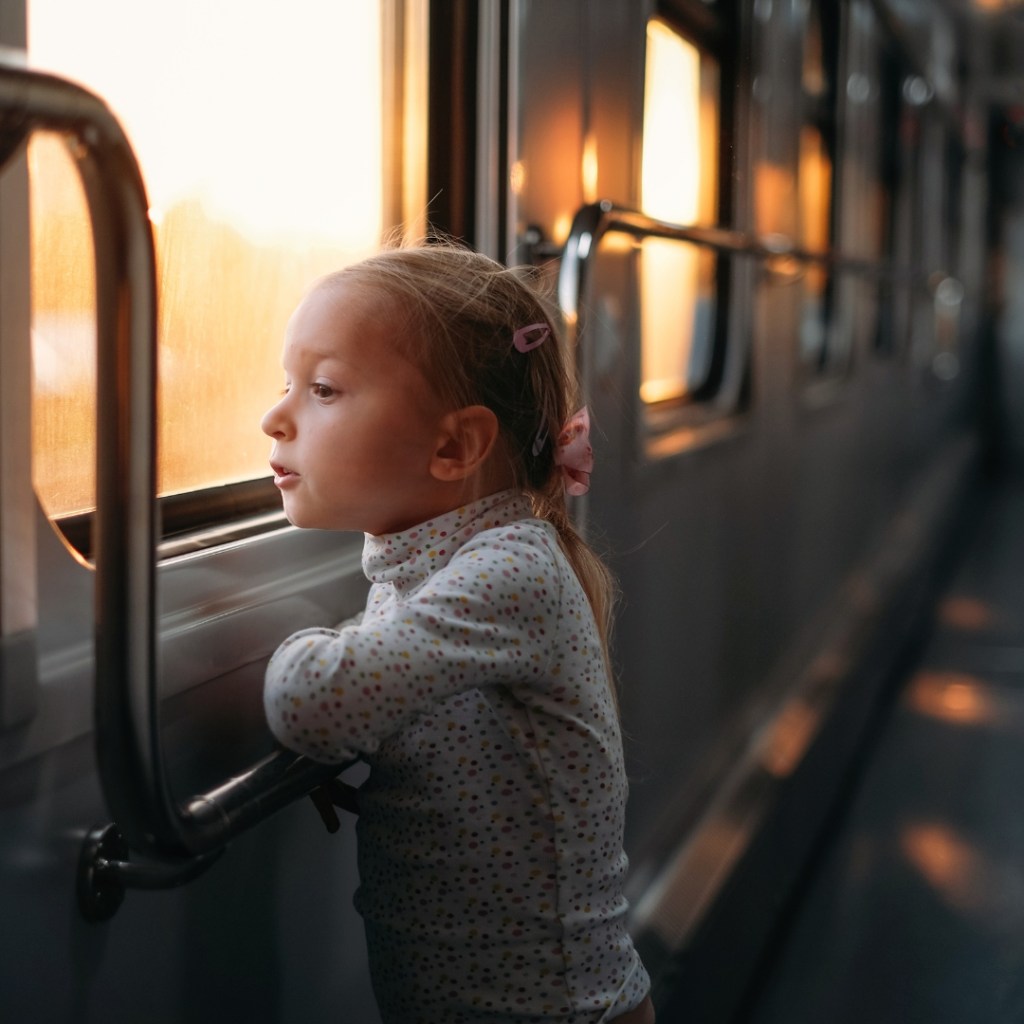
Make the trip enjoyable by engaging your kids in the journey. Play games, talk about what you’re seeing, or tell stories to keep them entertained. “I Spy” was a hit with my 4-year-old, as I pointed out interesting things we saw through the windows. It not only helped us pass the time, but it also helped to keep his mind occupied.
10. Flexibility and Patience are Key
As prepared as we may feel, transit delays, crowded buses, and unexpected hiccups do happen. And when they do, it can be extremely stressful. Being flexible and keeping calm helps us manage the situation better. Remember, our little ones pick up on our emotions, so staying relaxed will help keep them calm too.
Lastly, the biggest tip of all, try to enjoy the journey. Public transit can be a great way to see the world from a different perspective and can turn travel time into a fun part of your family adventure. Teaching little ones the importance of choosing sustainable transportation options is great, as you set the tone early in their lives.
With a little planning and preparation, you can turn your transit journey into a fun family adventure.
Happy Travels!