

By Amélie Chanda, Program Manager
Sitting at the meeting point of the Red and Assiniboine Rivers, Winnipeg is a city shaped by diverse neighborhoods. Home to more than 770,000 people with a dense, walkable downtown core surrounded by residential districts that stretch in every direction. Its population is a mix of long-time residents, newcomers, families, students, and one of the largest urban Indigenous communities in Canada (Census 2021) all of whom move through the city every day.
This guide is designed to help you navigate Winnipeg’s evolving transportation landscape whether you are a daily commuter, a new resident, or someone visiting the city for the first time. Winnipeg Transit had a major overhaul in 2025 to improve reliability, accessibility, and efficiency. Now is a perfect time to explore how the system works, what has changed, and how you can make the most of the city’s transit options.

Overview Of Winnipeg Transit System
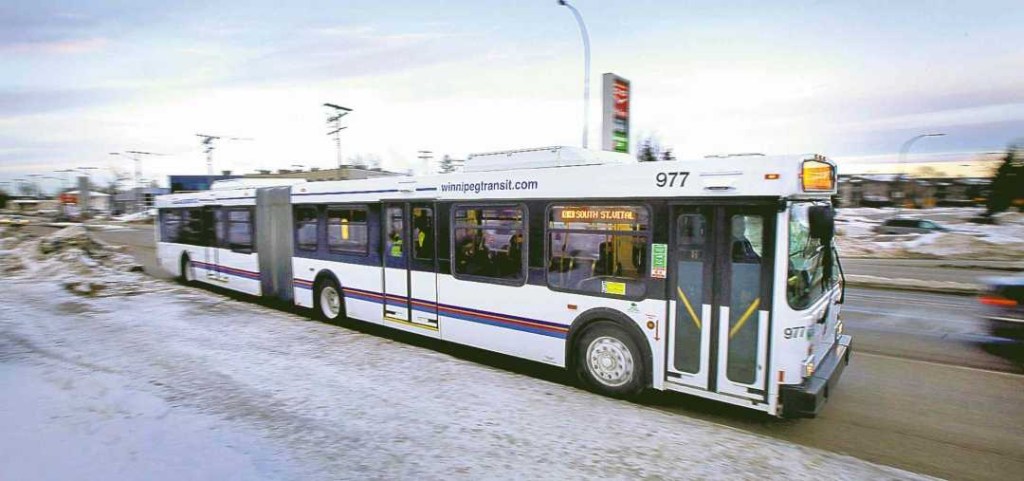
Winnipeg Transit moves a vast number of people each day (~148k/ day in 2025) across their 71 fixed routes. The system is made up entirely of bus service, with routes designed to connect nearly every part of the city. Riders can plan their trips through Winnipeg Transit’s website using Navigo and additional features to track bus locations and arrival times. Click here for a PDF of Winnipeg Transit’s system map.
Winnipeg’s rapid transit line provides faster and more direct service in the southwest portion of the city, linking the University of Manitoba to the core through dedicated busways. For a complete list of BLUE bus schedules, click here.
Fares can be paid using cash on board or with the Peggo smart card, which allows riders to load e-passes or e-cash for easy tap-and-go boarding. The cost of a Peggo card is $5, and can be purchased in person, online or by contacting 311.
Single fares, along with day, weekly, and monthly passes are available for a variety of age groups and demographics. Fares are valid for 90 minutes upon purchase and allow for free transfers between buses/routes. Riders can purchase fares online or at various retail locations across the city. See the table below for a complete list of fare pricing.
| Fare Type | Full(16-24 years) | Youth(0-16 years)* | Senior(65+) | Post-Secondary |
| Cash | $3.35 | $2.85 | $2.85 | $3.35 |
| Peggo e-passes | ||||
| e-cash | 3.00 | $2.20 | $1.50 | $3.00 |
| 24 hour e-pass | $11.10 | $8.15 | $5.55 | N/A |
| 5 day e-pass | $27.00 | $19.80 | $13.50 | N/A |
| 7 day e-pass | $30.00 | $22.00 | $15.00 | $24.00 |
| 28 day e-pass | $106.50 | $78.10 | $53.25 | $85.20 |
| Monthly e-pass | $115.50 | $84.70 | $57.75 | $92.40 |
| WINNpass e-cash** | $1.50 | $1.50 | N/A | N/A |
| WINNpass monthly** | $57.75 | $57.75 | N/A | N/A |
| Semester e-pass | N/A | N/A | N/A | $314.15 |
* Children 11 or under can ride for free when accompanied by a caregiver.
**WINNpass provides reduced fares to low-income families residing in Winnipeg.
Active And Micro-Mobility Options
Within Winnipeg, commuters can also integrate cycling and walking into their transit trips. Many bus stops and terminals include bike racks, and Winnipeg Transit buses are equipped with front-mounted bike carriers. The city continues to expand its cycling infrastructure, particularly along key corridors linking Downtown to surrounding neighborhoods. This bike map might be helpful to plan your next trip.

The 2025 Transit Overhaul
In 2025, Winnipeg introduced one of the most significant changes to its transit network in decades. It included a full redesign of bus routes, stop locations, and service patterns intended to make the system more reliable, efficient, and easier to navigate (source: City of Winnipeg).
One of the biggest changes was the consolidation of bus stops. Winnipeg removed thousands of stops with the goal of improving travel times and reducing frequent delays. While fewer stops can mean longer walks for some riders, it also creates more consistent spacing and faster trips across the busiest routes.
The overhaul also focused on building a stronger high-frequency network. Key routes now run more often throughout the day, giving riders shorter waits and more predictable connections, especially during peak periods. The network also introduced 12 on-demand service zones, where riders can request flexible pickup in areas with lower ridership. This hybrid model aims to maintain coverage while keeping core routes efficient. However, the changes were not without trade-offs. An analysis indicated that: “historically underserved communities in the downtown, North End and West End have lost up to three times as many bus stops as the rest of the city and seen significant reductions in late-night bus service.” (The Narwhal Sept 2025).
Accessibility
Winnipeg Transit offers a range of accessibility support designed to ensure that more residents, including those with mobility, sensory, or cognitive disabilities can travel independently and safely across the city. Most buses have a low floor and are equipped with ramps, priority seating, and space for mobility devices, making the regular network accessible for many riders. Bus stop announcements, both visual and audio, help support those with low vision or hearing impairments. Additionally, major hubs are designed with wide accessible pathways and boarding areas.
For riders who require door-to-door service, Winnipeg Transit operates Transit Plus, a specialized transportation program for people with disabilities who cannot use the regular system. Eligible users can book trips in advance to access services throughout the city with dedicated vehicles and trained drivers. Registration is required, and riders are encouraged to plan ahead, especially during peak travel periods.
Travelling Beyond Winnipeg
While the Winnipeg Transit bus system is the primary way to travel within city limits, several options make it easy to reach other destinations including the airport, other parts of Manitoba and other provinces.
Getting to the Airport:
Winnipeg Transit provides direct bus service to the Winnipeg James Armstrong Richardson International Airport (YWG) through Routes D12 Ellice, D13 Sargent, and 224 Sherwin – Valour. Buses stop right outside the terminal, and the same fares and Peggo payment options apply. For early morning or late-night flights, travellers should check schedules in advance, as service frequency may be reduced outside regular hours.
Getting out of the city:
For longer trips, various modes of transportation are available from Winnipeg.
- Bus: Companies like Rider Express and Ontario Northland provide routes to destinations such as Brandon, Portage la Prairie and Thunder Bay in Northern Ontario.
- Rail: Via Rail Canada offers passenger rail service from downtown Winnipeg with routes going west to The Pas and east to Ontario, offering a scenic and comfortable way to travel.
- Plane: Air travel remains a popular option for reaching remote northern communities, with regular flights from Winnipeg to destinations such as Thompson and Churchill.
Winnipeg is a city that moves through snowstorms and sunshine, connecting people from every corner of the community. Whether you ride the bus daily or are just beginning to explore your options, understanding the city’s transit network is the first step toward a smoother, more sustainable commute.
By planning ahead, using real-time transit tools, and considering alternatives such as walking and cycling or a combination of multiple modes of transportation, commuters can help shape a greener, more connected future for Winnipeg. Every trip taken by bus, bike, or foot contributes to cleaner air, less congestion, and a city that works better for everyone.
Photo Credits:
- https://www.nationalgeographic.com/travel/article/winnipeg-manitoba
- https://unsplash.com/photos/a-couple-of-people-riding-bikes-down-a-street-9WaYm5pHfN4
- https://janicelukes.ca/our-community/transit-our-community/winnipeg-transit-to-return-to-full-fall-service-schedule/