
pointA is one of the organizations behind Bike Training Collective Canada – a consortium of partners with a mission to increase the number of trained bike mechanics, which is foundational to growing the bike industry. There are so many people who are passionate about cycling and we want to help turn that passion and skill into meaningful work. But what does it take to become a bike mechanic? We recently spoke to Helen, a recent graduate of a bike mechanic training program who shares her inspiring story—from long-distance bike touring to learning how to fix flats and fine-tune gears. Her journey proves that the world of bike mechanics is more open and welcoming than it might seem at first glance.
We sat down with Helen to learn more about her path into the industry, her training experience, and her hopes for the future.
Q: What first got you interested in bikes, and why did you want to become a bike mechanic?
Helen: I’ve been into bikes for a while—before I even realized it. I used to spend 12 hours a day on weekends just biking. That turned into a love for bike touring. One of my most memorable trips was from Montréal to Québec, where I visited small towns and had a few too many flat tires—three in one day! That’s when it hit me: if I want to do longer tours, like biking from Vancouver to San Diego, I need to be able to fix my own bike.
So I started looking for a program to learn bike mechanics. It actually took me three years to find the right one. When I finally found it and made time to take it, I was so glad I did.
Q: What was it like learning to become a bike mechanic?
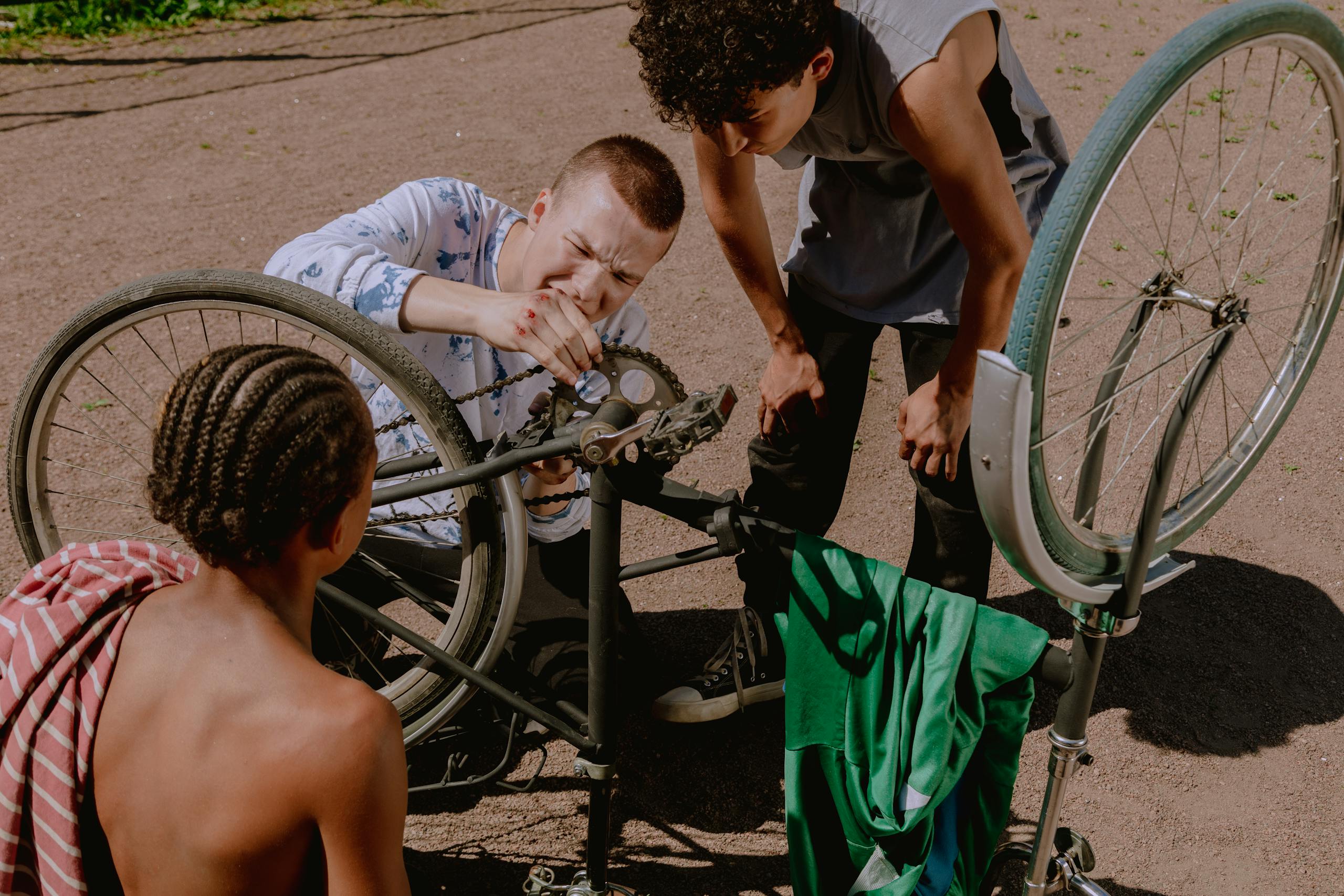
Helen: I took my course at the Learning Enrichment Foundation, and it was nothing short of amazing. There were only six of us in the class, and the shop had around 100 bikes that we could work on. That gave us hands-on experience with all kinds of different systems and problems.
The instructor, Darren Duke, was incredible. His knowledge and the way he taught us—there’s no way I could’ve afforded that kind of education elsewhere. He had so many unique tools too, things I’d never even seen before. It made the whole experience even more engaging.
Q: Did you have any doubts going in?
Helen: Absolutely. I’m an Asian woman, and I didn’t think I had the strength to do some of the work. At first, it was intimidating. But once I got into it, I realized that while strength is helpful—my instructor even recommended I start doing pushups!—it’s also about technique, patience, and learning.
Also, the bike community is so kind. There’s a saying: “There are no bad bike people,” and I’ve found that to be totally true. Everyone’s been really encouraging.
Q: Was the program accessible in terms of cost and time?
Helen: Definitely. I think the one-month format was perfect for me. It was intensive, but not overwhelming. It was doable, and I came out of it with real skills. I can now confidently say, “I know how to fix bikes.” That’s a lot to be able to say, and I’m proud of that.
Q: What are your hopes for your future as a bike mechanic?
Helen: My first goal is to keep practicing and not lose the skills I’ve learned. There’s still so much more to pick up, especially with all the new bike technologies out there. I want to keep learning—through work, volunteering, anything I can get my hands on.
Eventually, I’d love to do more long-distance touring. But this time, I’ll be able to fix my own bike on the go. That freedom is everything to me.
Q: How could the bike industry support you and others starting out?
Helen: Honestly, just being more connected would help a lot. Right now, there aren’t that many bike shops in a city, maybe around 50 tops, so it wouldn’t be hard to build a stronger network. But even with that, there’s barely any job postings for bike mechanics online right now. Maybe it’s seasonal, but it would be amazing to have a central place to find opportunities or even just meet other people in the industry.
Helen looked for bike training for 3 years and we’re thankful she found the opportunity. The Collective is working towards making it easier to access where to find bike mechanic training and to connect graduates with jobs so that they can apply their skills and receive gainful employment that will open them up to the rest of the industry. After all, being a bike mechanic is the critical set of skills that are required for anything bike related, from tourism like riding long distances to entrepreneurship.
Helen is living proof that you don’t need to fit the usual image of what a “bike guy” looks like in order to become a bike mechanic. The industry is open to all and we hope that more will join us in the future. If you are interested in joining us, whether you are a potential student, a current bike industry employer looking for bike mechanics, or would like to fund our work, please visit www.bikecareer.ca.