Commuting looks different for everyone, especially as routines shift and workplaces evolve. Whether you travel by transit, bike, foot, carpool, or electric vehicle, feeling confident on your commute can make a meaningful difference.
The Commuting with Confidence series shares practical, everyday tips to help you feel more comfortable, aware, and prepared on your journey – no matter how often you commute or what mode you choose. These tips are designed to support safer, more confident travel as you return to the office and navigate changing schedules and seasons.
Transitioning from a home office back to a physical workplace is the perfect time to rethink your morning routine. If you’ve been eyeing that bike in the garage but feeling hesitant about the “city riding” part, you aren’t alone. Confidence on two wheels isn’t something you’re born with; it’s something you build.
In our Commuting with Confidence series, we’ve gathered practical tips to ensure you’re prepared, predictable, and—above all—safe as you start rolling.
1. Clothing & Safety Gear
Helmet
Wear a properly fitted helmet and secure it every ride. Your helmet can only protect you if you are wearing it properly. Follow the “2-V-1” method (see diagram below).

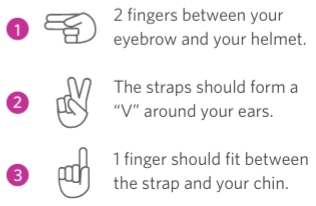
Source: CycleTO Handbook
Clothing
For cold weather, we recommend wearing similar clothing as you would for other winter activities – start with what you already have. Keep in mind that you may be a bit chilly as you head out, but you’ll warm up quickly once you start pedalling! Protect your extremities with warm gloves and a headband or thin toque that fits under your helmet to protect your ears. Don’t forget a scarf or neckwarmer to keep you nice and cozy.
Your baselayer should be warm and breathable. Wool is best due to its moisture-wicking capabilities, it will keep you warm even if you get a little bit sweaty. Try to avoid wearing cotton as your baselayer as this can trap moisture next to your skin.
Next you’ll want some kind of insulating material as your midlayer. Think fleece, down, that warm sweater someone knitted for you! It’s best if this layer has a zipper or buttons so you can undo them a bit in case you get too warm on your ride.
The midlayer is the one doing the work of keeping your top half warm, so for your jacket, you don’t need something too heavy. Remember cycling is an active mode of transportation so you don’t want to overheat. A lightweight jacket or windshell can do the trick here. Fully waterproof jackets are great, as long as they have some ventilation built in. Dress in layers so you can adjust to weather and temperature changes.
Additionally, we recommend that you wear a colourful item, or reflective accessories to keep you visible to others on the road. Look for reflective tape or bands that you can add on top of your jacket or pants. You can also add these to your bag, backpack, or helmet.
Accessories
Make sure you can be seen by other road users. People driving, walking, and others on bicycles can’t share the space with you if they can’t see you. Use a white light on the front of your bike and a red light on the rear to make sure you can be seen clearly.
Always ride with a working bell or horn within easy reach on your handlebars. It is the law and makes it easy for you to indicate your intention to others (e.g., trying to pass).
It is best practice not to wear earbuds or earphones while cycling, as you must always be cautious of your surroundings and be able to hear anything that can put you or others in harm’s way.
2. Bicycle
Once you have figured out all your gear and safety equipment, we can start looking at the bicycle. If you’re not too sure about how to maintain your bike, don’t be discouraged! The basics are as easy as ABC.
Check the essential parts of your bicycle regularly. You can do this by completing the “ABC Safety Check”.
- Air: If you press down on the tire with the base of your palm and it feels soft and squishy, it’s time to pump it up. Check that nothing prevents the wheels from spinning freely, and that none of the spokes look bent or broken.
- Brakes: If you’re able to easily keep rolling the bike forwards while pressing either of the brake levers one at a time, or you hear a noise, get the brakes checked before you ride.
- Bars: Stand in front of your bike and hold the front wheel between your feet. Grab the handlebars and see if you can move them while holding the front wheel steady. They shouldn’t move at all or make any noises like squeaking or rattling.
- Chain: If you see any rust spots, apply a small amount of bicycle-specific chain lubricant. It’s best to use a small amount at a time as you can always add more if needed.
- Cranks: Should feel firmly attached to the bike and not make any rattling or squeaking noise.
3. Cycling Safety
Hand Signalling
Signal your turn before you reach an intersection or plan to switch lanes by using the hand signals or clearly pointing. Additionally, make sure to look over your shoulder or the direction of where you plan to go to ensure it is safe to do so. The cycling hand signalling can be found below:

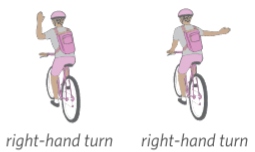
Source: CycleTO Handbook
4. Cycling Rules of the Road
When it comes to the rules, a bicycle is just like any other vehicle out on the road. If you’re riding a bike on the street, this means stopping at all red lights and stop signs, signalling for turns, and yielding the right of way where appropriate, just like you would if you were driving a car.
Riding Etiquettes
As best practice when you’re on your bike, stay on the right side of the road closest to the curb. On roads that are too narrow for drivers to pass you safely, you are entitled to take the entire lane. On roads where the right-most lane is a right-turn-only lane, and your intention is to go straight, you must switch to the lane that intends to go straight.
Ride Predictably
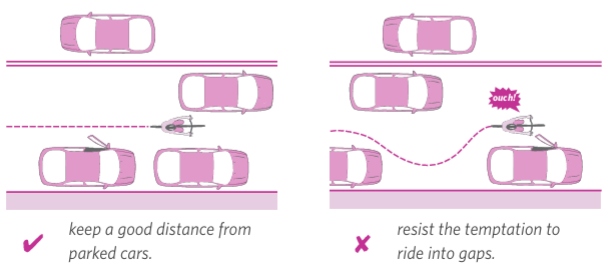
Whenever you are cycling on the road, ride defensively. This means you must cycle predictably, anticipate other road user’s movements, and make eye contact where necessary. Ride in a straight, predictable line. Do not swerve in and out of traffic, construction zones, or parked cars (see diagram below). It is your right to take up as much space as needed to be safe.
Source: CycleTO Handbook
Ride away from parked cars to avoid riding into someone’s car door if they open it without checking for oncoming traffic. Finally, always check over your shoulder and signal before switching lanes.
Route Planning
Choose a route that matches your comfort level. Sometimes the shortest path may not be the best path. Your town or city may have resources like a digital or printed cycling map with information about the best routes. If you’re not sure if the route you’ve chosen will work for your commute, try going on an exploratory trip first to check it out. Give yourself extra time so that you don’t feel rushed.
Build confidence gradually – start with short rides and build the endurance and confidence to do longer routes.
Ready to start Cycling to Work?
Our Safe Cycling: Rules,Technique, and Gear Workshop covers the best practices for locking bikes, types of racks, and theft prevention—plus an optional field trip around the neighbourhood around the office to learn where and how to use nearby bike parking and other bike infrastructure. This workshop meets them where they are and can be done remotely or in-person. Contact Warren Burnett (Business Development Manager) to learn more about our free Commuting with Confidence workshops.
Want to Feel Confident on Every Part of Your Commute?
Confidence looks different for everyone and that’s okay.
Your commute should support your life, not add unnecessary stress to it. Whether you’re easing back into in-person work, trying a new mode, or adjusting your routine with the seasons, the goal isn’t perfection – it’s progress and comfort over time. Our Commuting with Confidence workshops can give you the boost you need with personalized commuting tools and advice.
Explore the rest of the series:
- Carpooling with Confidence: Your Guide to Sharing Rides (Without the Awkwardness)
- Commuting with Confidence: 6 Tips for Women Navigating the City on Their Own Terms
- EV Driving with Confidence: How to Keep Your Charge (and Your Cool) in Cold Weather
- Riding GO Transit with Confidence: What to Know Before You Go
- Riding TTC with Confidence: What to Know Before You Go
- Transit with Confidence: 5 Tips All Transit Riders Need to Know
- Walking in Cold Weather with Confidence: Your Guide to a Safer, Steadier Commute
This post is part of the Commuting with Confidence series — practical guidance to help every employee navigate their journey safely and confidently, whatever that journey looks like.