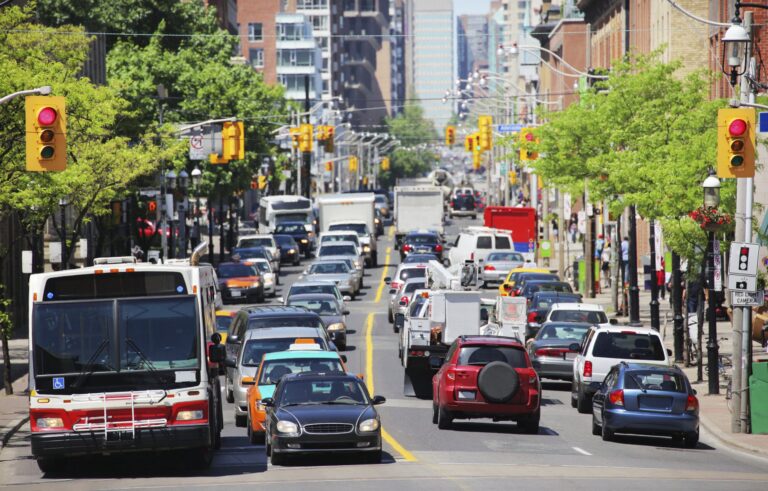
Commuting looks different for everyone, especially as routines shift and workplaces evolve. Whether you travel by transit, bike, foot, carpool, or electric vehicle, feeling confident on your commute can make a meaningful difference.
The Commuting with Confidence series shares practical, everyday tips to help you feel more comfortable, aware, and prepared on your journey – no matter how often you commute or what mode you choose. These tips are designed to support safer, more confident travel as you return to the office and navigate changing schedules and seasons.
For many women, commuting involves a layer of mental planning that rarely gets talked about. It’s not just about which bus to take or how long the trip will be. It’s about which route feels right, which station exits are well-lit, whether to put in both earbuds or just one. Research confirms what many women already know from experience: there is a real gender gap in how people move through cities, and it’s shaped by more than just transit schedules.
That experience isn’t uniform, either. Women who are newcomers to Canada, racialized, or navigating tighter budgets often face additional layers of complexity, with fewer flexible options, less familiarity with local systems, and environments that weren’t always designed with them in mind. We want to acknowledge that upfront, because pretending everyone starts from the same place doesn’t serve anyone.
This guide offers a set of practical, empowering strategies that work across different commutes, budgets, and comfort levels.
Your Comfort Is Valid — Full Stop
Before we get into the practical tips, let’s say something clearly: safety isn’t just about statistics. It’s about how you feel.
If a route looks faster on the map but something about it feels off, it’s not the right route for you. If a train car gives you an uneasy feeling, moving to another one isn’t overreacting — it’s good judgment. Trusting your instincts isn’t paranoia. It’s one of the most reliable tools you have, and giving yourself full permission to act on it is the foundation everything else in this guide is built on.
You don’t owe anyone an explanation for prioritizing your own peace of mind.
1. Know Your Environment
Confidence comes from familiarity — and familiarity is something you can build deliberately.
Trial your route before you rely on it. Heading somewhere new for the first time, such as a new workplace, a new neighbourhood, or a new transit line? Try the journey on a weekend or with a friend first. You’ll pick up details that no app will tell you: which exits involve less walking after dark, where the well-lit paths are, which stops tend to be busier and feel more comfortable. This is especially useful in winter, when a route that felt fine in October can feel very different by February.
Find the Designated Waiting Areas. Most Canadian transit platforms have Designated Waiting Areas (DWAs), which are spots monitored by cameras and typically located near where the operator’s car stops. They are there specifically for moments when you want to feel a little more anchored while you wait. Knowing where they are before you need them means you won’t have to look for them later on.
Know your emergency options. Take a moment to familiarise yourself with the emergency features of the transit you use regularly, including how to activate the alarm on the subway, where the emergency telephone is, and the app or texting protocols for reporting any security issues. In Canada, most major transit systems have dedicated Transit Safety or Transit Enforcement Officers in addition to regular staff and they’re a resource for you. Staffed station booths are also worth noting: knowing which stations have a person in the booth, especially during early morning or late evening travel, gives you a familiar point of contact if you ever need one.
Mix it up occasionally. You don’t have to follow a rigid routine every single day. Occasionally varying your route, your timing, or which car you board keeps your movements less predictable, and can also just make the commute feel a little less on autopilot.
2. Plan Ahead — Including Your Backup Plan
A smooth commute is great. A backup plan is what gives you real confidence.
Map out your options in advance. Before trying a new route, have it pulled up on your phone rather than figuring it out in real time. Dedicated apps by your local transit agency can show you real-time delays and alternate routes so you’re never making decisions from scratch at a busy intersection at 7 a.m.
Layer your options. A membership for your city’s bike share program, a ridehailing app, or a transit pass are great safety nets. You don’t have to use them every day, but having them available means you’re never truly stuck. This is particularly worth thinking through in smaller cities where transit frequency drops significantly in the evenings.
For carpools, start with public pickup spots. Until you’ve had a chance to build rapport with your carpool group, choose a public meeting point rather than sharing your home address.
3. Keep Yourself Organised and Hands-Free
Fumbling through a deep bag for your transit pass while standing on a busy platform is more than just annoying — it pulls your attention away from your surroundings at exactly the wrong moment.
Keep essentials accessible. Your transit card, keys, and phone should be easy to reach without digging. A small interior pocket or a clip goes a long way — and in cold weather, when you’re also navigating gloves and a heavy coat, the less rummaging required the better.
The one-bag rule. If you’re running errands or carrying a lot, consolidate into a single manageable bag where possible (we happen to like backpacks as it keeps your hands free!).
Stay connected — and charged. A portable power bank is one of the most practical things you can keep in your bag year-round, and genuinely essential when cold temperatures drain phone batteries faster than you’d expect. Save a few key numbers offline too, since subway Wi-Fi can be unreliable when you actually need it.
4. Trust Yourself in Shared Spaces
This section is about something that doesn’t get talked about enough: the social pressure to be polite, accommodating, and undemanding in public spaces — even when something doesn’t feel right.
You don’t owe anyone your discomfort. If someone is making you uncomfortable on transit, you are allowed to move immediately, without explanation, and without guilt. You don’t need to wait for a situation to escalate before acting on a feeling. Moving seats, changing cars, or stepping off and reboarding are all completely reasonable responses to discomfort.
Understanding the Bystander Effect — and how to work around it. The Bystander Effect is a well-documented psychological phenomenon where individuals are less likely to offer help in a crowd because everyone assumes someone else will step in. If you ever find yourself in a situation where you need support, directing your request to a specific person — “You, in the red jacket, can you help me?” — is far more effective than a general appeal. And if you see someone who looks uncomfortable or in need, a simple “Are you okay?” can be enough to break the cycle. Collective awareness makes transit safer for everyone.
Use the programs that exist for you. Many Canadian transit systems offer a Request a Stop program during evening hours, allowing you to ask the driver to let you off between regular stops to get closer to your destination. The TTC offers this program, as do many municipal transit systems across Ontario and other provinces. If your city doesn’t have a formal program, it’s still worth asking the driver as many will accommodate a safety-related request. These programs exist because the need is real, and using them is exactly what they’re there for.
If you use earbuds on transit, try using Transparency Mode or keeping one ear free so that you’ll still catch announcements, notice what’s happening around you, and hear anyone approaching. It’s a small adjustment that keeps you present without asking you to give up the thing that makes commuting enjoyable.
5. Dress for the Journey — Not Just the Destination
In cold weatherwinter, that means warm layers you can move in, boots with actual grip for icy sidewalks and slushy bus stops, and gloves that still let you tap your transit card or unlock your phone. In summer, it means comfortable shoes that can handle a longer walk if your bus is running late or allow you to skip the packed subway car. Many women keep a pair of commuter flats in their bag and switch into office shoes once they arrive. The goal is to feel physically capable and comfortable throughout the journey, not just at the destination.
6. You Don’t Have to Do This Alone
One of the simplest and most effective things you can do for your commute is share it.
A colleague heading in the same direction, a neighbour on the same transit line, a friendly face you see every morning at the same stop – community on the commute is real, and it makes a genuine difference. Not just for safety, but for making the journey feel less like something to get through and more like part of your day.
And on the days when it does feel like a lot? Be kind to yourself. Some days the city feels easy. Other days it takes more out of you than it should. Both are valid.
You’ve Got This
Commuting confidently as a woman in Canada isn’t about eliminating every uncertainty or having a perfect plan for every scenario. It’s about knowing your options, trusting your instincts, and giving yourself permission to make choices that prioritise your comfort.
Looking to Create Safety Support Groups?
Led by a certified psychotherapist and licensed occupational therapist, our Safety Support Group Workshop will empower employees to identify and share collective solutions to address their commuting concerns. This discussion-based workshop fosters connection and introduces practical strategies for safer travel. Contact Warren Burnett (Business Development Manager) to learn more about our free Commuting with Confidence workshops.
Want to Feel Confident on Every Part of Your Commute?
Confidence looks different for everyone and that’s okay.
Your commute should support your life, not add unnecessary stress to it. Whether you’re easing back into in-person work, trying a new mode, or adjusting your routine with the seasons, the goal isn’t perfection – it’s progress and comfort over time. Our Commuting with Confidence workshops can give you the boost you need with personalized commuting tools and advice.
Explore the rest of the series:
- Carpooling with Confidence: Your Guide to Sharing Rides (Without the Awkwardness)
- Cycling with Confidence: 4 Tips Every Beginner Cyclist Needs to Know
- EV Driving with Confidence: How to Keep Your Charge (and Your Cool) in Cold Weather
- Riding GO Transit with Confidence: What to Know Before You Go
- Riding TTC with Confidence: What to Know Before You Go
- Transit with Confidence: 5 Tips All Transit Riders Need to Know
- Walking in Cold Weather with Confidence: Your Guide to a Safer, Steadier Commute
This post is part of the Commuting with Confidence series — practical guidance to help every employee navigate their journey safely and confidently, whatever that journey looks like.