Commuting looks different for everyone, especially as routines shift and workplaces evolve. Whether you travel by transit, bike, foot, carpool, or electric vehicle, feeling confident on your commute can make a meaningful difference.
The Commuting with Confidence series shares practical, everyday tips to help you feel more comfortable, aware, and prepared on your journey – no matter how often you commute or what mode you choose. These tips are designed to support safer, more confident travel as you return to the office and navigate changing schedules and seasons.
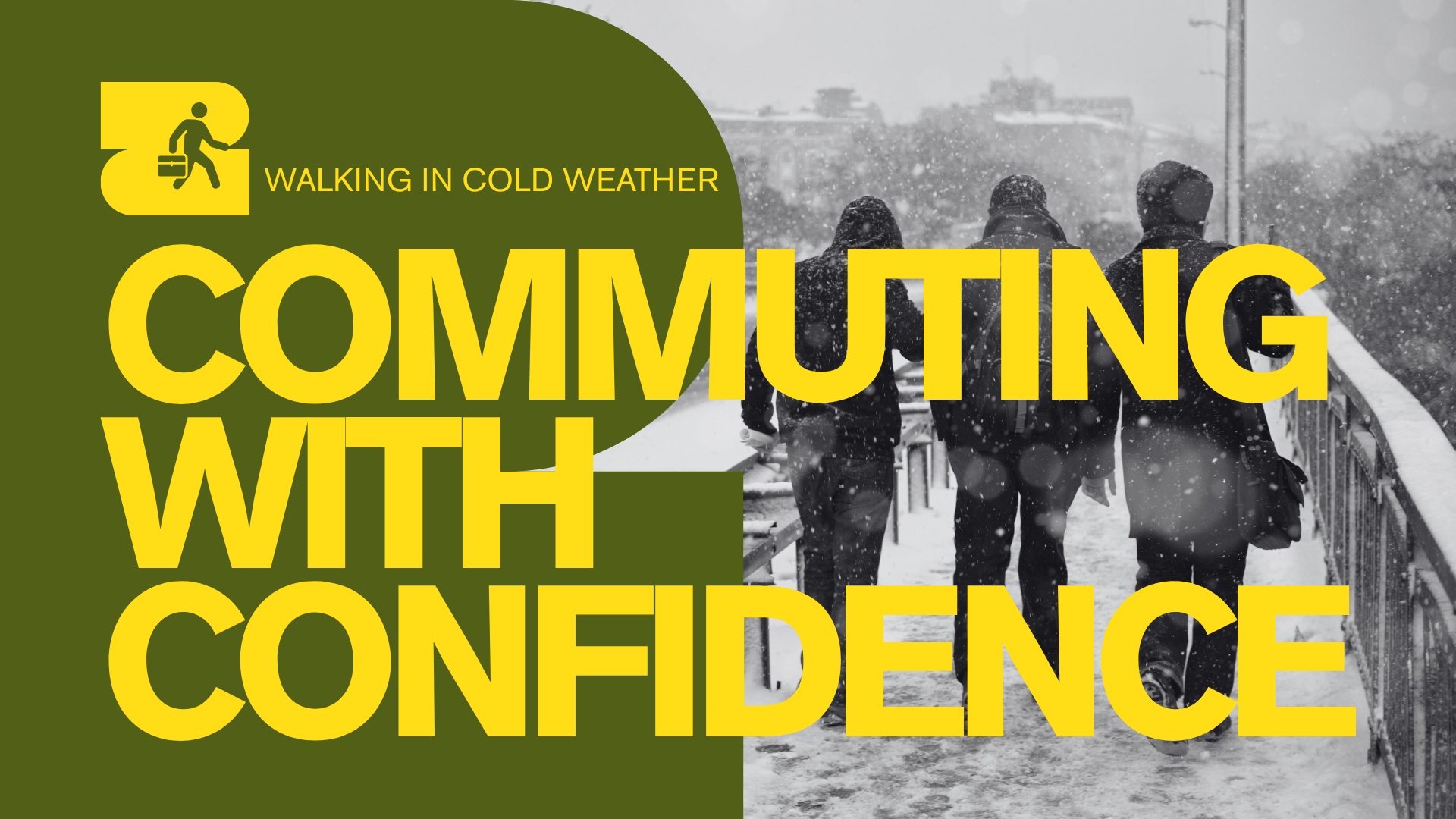
Whether you walk the whole way to the office or just a few blocks to your transit stop, road conditions, particularly in wintery weather, can make even a familiar route feel uncertain. Icy sidewalks, poor visibility, and unpredictable weather don’t have to derail your commute — or your confidence. This guide is designed to give every employee practical, trustworthy information for navigating their journey safely, no matter how often they commute or how far they walk.
Why Confidence Matters More Than Caution
It might seem like the safest approach to walking in cold weather is, well, just avoid it or simply to slow down and be careful. But hesitation and fear can actually work against you — tense muscles, shortened attention spans, and an over-focus on the ground beneath your feet can increase your risk of stumbling, not reduce it.
Walking with confidence comes from preparation, body awareness, and knowing what to do before a situation becomes dangerous.
1. Start from the Ground Up: Footwear & Layering
The right gear doesn’t just keep you warm, it gives your body the support it needs to move well in challenging conditions.
Choose footwear that works with your body, not against it. Look for boots with a thick, non-slip sole made of natural rubber, which maintains grip on wet and icy surfaces. Wide, low heels provide a broader base of support, and lightweight waterproof insulation keeps your feet dry without adding bulk that affects your gait. These features matter year-round too — the same qualities that protect you on ice also help on wet tile floors or rain-slicked sidewalks.
Layer for movement, not just warmth. A single heavy coat can restrict your range of motion and cause you to overheat as your body warms up mid-walk. Instead, dress in breathable layers you can adjust on the go. And don’t underestimate the “Big Three” for cold weather: a hat, scarf, and warm gloves. Cold hands instinctively retreat to pockets — which, as you’ll read below, is one of the easiest ways to compromise your balance.
Make yourself visible. In winter, shorter days and overcast skies reduce how easily drivers and cyclists can see you. Bright colours and reflective patches on your bag or jacket are simple additions that significantly improve your safety — especially during early morning or evening commutes.
2. Walk Mindfully
Adjusting how you walk is the single most effective thing you can do to prevent a slip or fall. These techniques are grounded in the same movement principles occupational therapists use when working with people to improve their everyday safety and function.
Keep your hands free. It’s tempting to bury your hands in your pockets when it’s cold, but your arms play a crucial role in maintaining your centre of gravity. Wearing warm gloves means your hands stay comfortable and available to help you balance and to brace you if needed.
Try the “Penguin Walk” on icy surfaces. When you hit a slick patch, shorten your stride, slow your pace, and take small, flat-footed steps — think of a penguin’s steady, deliberate waddle. Keep your torso upright (resist the urge to lean forward), your knees slightly soft, and your gaze ahead rather than fixed on the ground. This posture distributes your weight more evenly and gives you more time to react to what’s underfoot.
Be especially careful getting in and out of vehicles. Slips most commonly happen at transition points such as stepping off a bus, getting out of a car, or navigating a curb. Before you step down, look at where your foot is landing, use a handhold if one is available, and step down deliberately rather than jumping or rushing.
Walk with a buddy when you can. A walking partner isn’t just good company — they can help you spot hazards ahead, provide physical support on difficult terrain, and get help quickly if you do take a fall.
3. Stay Aware: Hazard Recognition and Smart Route Planning
Confidence also means trusting your judgment about your environment.
Learn to spot black ice. Black ice is one of cold weather’s most deceptive hazards — it looks like a wet patch but has virtually no traction. It commonly forms overnight on shaded sidewalks, near drains, under overpasses, and on bridge surfaces. If a patch of pavement looks slightly darker or shinier than the rest, treat it as ice and avoid accordingly.
Put your phone away. Distracted walking is genuinely dangerous on colder days. Staying off your phone means you can hear approaching vehicles and cyclists, notice hazards before you’re on top of them, and keep your head up, which is essential for the balanced posture described above.
Choose your route with intention. If a sidewalk looks uncleared or a shortcut seems poorly lit, take the long way. A well-maintained, familiar route that you know is always worth an extra few minutes. Give yourself buffer time on difficult days so you’re not rushing.
Know what to do if you slip. Even the most prepared walkers can lose their footing. If you feel yourself going down, try to relax rather than tense up as rigid muscles increase injury risk. Aim to land on the fleshier parts of your body like your side or thigh, tuck your chin to protect your head, and let go of whatever you’re carrying so your arms can help absorb the impact. If you’re hurt or shaken, stay where you are until you feel ready to get up, and ask for help if you need it.
Progress, Not Perfection
Walking in cold weather is a skill, and like any skill, it gets easier with practice, the right knowledge, and a little support. Give yourself extra time, trust the techniques above, and remember that building confidence is a process, not a checklist.
You don’t have to figure it out on your own.
Ready to Walk with More Confidence?
Our Walking with Confidence Workshop brings registered occupational therapists directly to your workplace to deliver practical, personalized guidance in a welcoming group setting. Whether your employees are returning to in-person work, managing a long commute, or simply want to feel steadier on their feet this season. This workshop meets them where they are and can be done remotely or in-person. Contact Warren Burnett (Business Development Manager) to learn more about our free Commuting with Confidence workshops.
Want to Feel Confident on Every Part of Your Commute?
Confidence looks different for everyone and that’s okay.
Your commute should support your life, not add unnecessary stress to it. Whether you’re easing back into in-person work, trying a new mode, or adjusting your routine with the seasons, the goal isn’t perfection – it’s progress and comfort over time. Our Commuting with Confidence workshops can give you the boost you need with personalized commuting tools and advice.
Explore the rest of the series:
- Carpooling with Confidence: Your Guide to Sharing Rides (Without the Awkwardness)
- Commuting with Confidence: 6 Tips for Women Navigating the City on Their Own Terms
- Cycling with Confidence: 4 Tips Every Beginner Cyclist Needs to Know
- EV Driving with Confidence: How to Keep Your Charge (and Your Cool) in Cold Weather
- Riding GO Transit with Confidence: What to Know Before You Go
- Riding TTC with Confidence: What to Know Before You Go
- Transit with Confidence: 5 Tips All Transit Riders Need to Know
This post is part of the Commuting with Confidence series — practical guidance to help every employee navigate their journey safely and confidently, whatever that journey looks like.