Excited to buy a bike, but feeling overwhelmed by all the details? Shopping for a bicycle becomes much easier when you know what to focus on: fit, safety, repairability, and seller trust.
Whether you choose a brand-new model or a secondhand ride, this guide walks you through the core areas every buyer should check:
- Consumable Components: Parts that wear out over time (tires, tubes, brake pads, grips).
- Major Repairable Components: Mechanical parts that drive and steer the bike (wheels, pedals, cranks, drivetrain).
- Frame & Sizing: Ensuring the frame material is structurally sound and correctly sized for your body.
Use this guide in three steps: first, confirm the bike fits your body and riding needs; second, check whether the frame and major components are sound; and third, decide whether any needed repairs are affordable enough to make the bike worth buying.
Choosing the Right Bike Type & Fit
Before looking at individual listings, narrow down which style matches your riding goals:
- Hybrid / Commuter: Best for city streets, paved paths, and daily errands. Features an upright, comfortable riding position.
- Road Bike: Built for paved roads, fitness riding, and speed. Features drop handlebars and skinny tires.
- Mountain Bike (MTB): Built for off-road dirt trails. Features wide, knobby tires and front/rear suspension to absorb bumps.
- Gravel / Adventure: A blend of road and mountain bikes—ideal for a mix of pavement, dirt roads, and gravel paths.
Quick Sizing Rule of Thumb
- Standover Height: Stand flat-footed over the top tube. You should have 1–2 inches of clearance between your body and the frame for road/hybrid bikes, and 2–4 inches for mountain bikes.
- Saddle Height: Sit on the bike with your heel on the pedal at its lowest position—your leg should be completely straight. When pedaling normally with the ball of your foot, you should have a slight, comfortable bend in your knee.
Buying a New Bike
Key takeaways:
- Be wary of very affordably priced new bikes. While it may seem like you’re getting a great deal, extremely low prices on new bikes are only possible with low build quality of both the frame and components.
- Once you buy a new bike, register its serial number with your local police service or an online registry like Project 529 to protect yourself against theft. If the seller refuses to provide you with a serial number, walk away.
What to check before buying new:
Think of a bargain-basement new bike as “fast fashion” on wheels. It may look shiny and attractive in the store, but it degrades quickly under normal use and is often expensive—or impossible—to repair when something breaks.
A low price isn’t an automatic disqualifier, but the cheaper a bike is, the more critical it is to look past bright paint, fancy accessories, and brand stickers. Focus your attention on the frame and major components first, as these determine whether the bike is safe, comfortable, and built to last.
Where You Buy Matters: Big-Box vs. Local Bike Shops
- Department / “Big-Box” Stores: Ultra-budget bikes sold at department stores are often assembled by retail clerks rather than trained mechanics. They frequently use proprietary, non-standard parts that local repair shops cannot replace or service.
- Local Bike Shops (LBS): While new bikes at a dedicated shop cost more upfront, they come professionally assembled, tuned, and usually include free initial break-in adjustments.
- Community Bike Co-ops: A great middle ground! Co-ops sell refurbished, quality-checked secondhand bikes at accessible prices.
⚡A Quick Note on E-Bikes: If you are buying an electric bike, prioritize battery safety. Look for UL-Certified batteries and chargers to prevent fire hazards. If buying a used e-bike, confirm that replacement batteries are still manufactured—a dead proprietary battery can turn an e-bike into an expensive paperweight.
Deciphering Specs and Components
Bike listings can feel intimidating with all their technical numbers, brand names, and jargon. To judge build quality confidently, separate components into two main categories:
1. Critical Components (Hard or Expensive to Replace)
- Parts include: Cranks, fork, wheels, drivetrain (gears/shifters), and tires.
- Why they matter: Beginners often overlook these, but they dictate the bike’s safety, performance, and long-term value. Replacing a broken fork or low-grade drivetrain can quickly cost more than the bike itself.
2. Non-Critical Components (Simple or Affordable to Replace)
- Parts include: Grips, saddle, bell, bottle cages, baskets, and pedals.
- Why they matter: These parts are obvious to the eye and easy to market, but they are inexpensive to swap out later. Don’t be fooled by a budget bike loaded with nice accessories if its core components are cheap and flimsy.
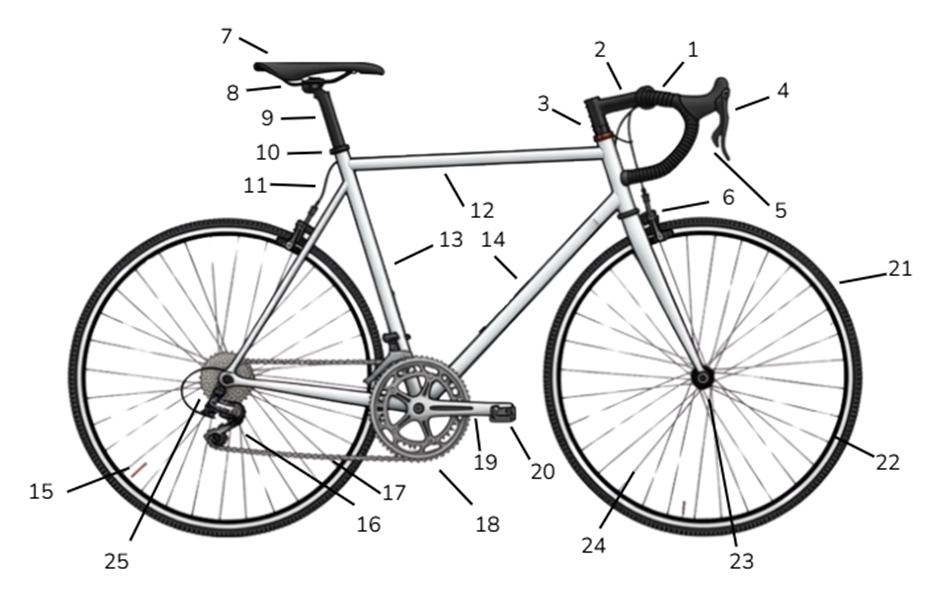
| 1. Handlebar | 2. Stem | 3. Headset | 4. Brake Lever | 5. Shifter Lever |
| 6. Brake | 7. Saddle | 8. Saddle Rails | 9. Seatpost | 10. Seat Post Clamp |
| 11. Cable | 12. Top Tube | 13. Seat Tube | 14. Downtube | 15. Valve |
| 16. Derailleur | 17. Chain | 18. Chainring | 19. Crank | 20. Pedal |
| 21. Tire | 22. Rim | 23. Hub | 24. Spoke | 25. Cassette |
Buying a Used Bike
Key takeaways:
- Look for a solid, high-quality build paired with a reputable seller
- Worn consumable parts (like tires or chains) are easy to replace if the bike’s frame and core drive system are in great shape
- Always ask for the serial number before meeting to confirm the bike isn’t stolen
At First Glance: Identifying the “Oldie but Goodie”
When inspecting a used bike, start with a quick visual sweep of the frame before diving into individual components:
- ❌ Immediate Dealbreakers: Cracks in the frame, severe rust near frame joints, or a seized seatpost (if the seatpost won’t adjust, walk away).
- ✅ Acceptable Cosmetic Wear: A minor spot of surface rust on the chain or handlebars is normal and easily cleaned or replaced.
How to Inspect: The ABC Check & The M Test
Combining these two simple inspection methods gives you a structured way to check the whole bike:
- The M Test: Trace the shape of an “M” along the bike frame, starting at the rear hub, moving up to the seatpost, down to the bottom bracket (where pedals attach), up to the headset/handlebars, and down to the front hub.
- The ABC Check: Evaluates mechanical functions along that path—Air/Wheels, Brakes/Bars, and Chain/Cranks.
The ABC Inspection Breakdown
A: Air & Wheels
| Worth the Fix | Flat tires where the tread is still good (usually just needs a new tube, ~$25) |
| Think Twice | Worn-out, dry-rotted, or severely cracked tires ($50–$80 per tire to replace) |
| Dealbreakers | Dented rims, broken spokes, or wheels that wobble significantly or rub against the frame when spun |
| Test Ride | Listen and feel for rattling, wobbling, or uneven rolling sensations from the wheels |
B: Brakes & Bars
| Worth the Fix | Worn-out or stiff brake pads ($15+ per set) |
| Think Twice | Damaged, frayed, missing cables/housing, or broken brake levers and calipers |
| Dealbreakers | Noticeable play or wobble in the handlebars or fork, indicating a damaged headset or fork that requires replacement |
| Test Ride | Test front and rear brakes individually at low and moderate speeds Feel for erratic steering, pulling, or resistance when turning the handlebars |
C: Chain and Cranks
| Worth the Fix | A loose or slightly rusty chain, imperfect shifting, or worn pedals (new chain: $20–$30) |
| Think Twice | Erratic shifting, slipping gears, or gear teeth that look worn down and pointed like “shark teeth” (requires replacing the chain, cassette, and possibly derailleurs) |
| Dealbreakers | A grinding feeling or looseness inside the bottom bracket when pedaling, or a wobbly rear cassette/hub |
| Test Ride | Pedal smoothly and shift through every gear. Listen for clicking, slipping, or sticking |
Safe Test Ride Etiquette
When meeting a seller from an online marketplace:
- Meet in Public: Choose a well-lit, busy area (like a well-used parking lot or coffee shop)
- Come Prepared: Bring your helmet so you can safely test ride at realistic speeds
- Collateral: Expect the seller to hold your cash or ID while you take the bike for a quick spin down the block
Verify Ownership Before You Buy
Stolen bikes are common on secondhand marketplaces. Protect yourself before meeting up:
- Locate the Serial Number: The serial number is usually etched on the underside of the frame, right beneath the bottom bracket shell (where the pedal arms meet the frame).
- Run a Check: Ask the seller for the serial number prior to meeting and run it through stolen-bike registries like CPIC (Canadian Police Information Centre) or Project 529.
- Watch for Warning Signs: Walk away if the seller refuses to provide the serial number, gives conflicting details, or pressures you into a rushed cash sale.
Final Things to Consider
Whether buying new or used, factor these essential accessories into your total budget:
- Helmet: Essential safety gear ($50–$100).
- Lock: A heavy-duty U-Lock or heavy chain lock ($40–$90). Avoid thin cable locks—they can be cut in seconds.
- Lights: Front white light and rear red light/reflector ($20–$50) for night visibility and legal compliance.
- Basic Repair Kit: A hand pump, spare inner tube, and tire levers ($30).
Need Help Checking Over Your Bike?
Does your bicycle need extra attention after reviewing these guidelines? pointA offers Bike Repair Clinics for organizations and workplaces. We inspect bicycles on-site, perform minor repairs and adjustments, and advise you on any larger maintenance items that may require a professional local bike shop. Contact us to learn more.