Commuting is part of everyday life. Whether you walk, bike, drive, take public transit, or use a combination of these options to get around, you will encounter challenges. This guide provides practical strategies to make your commute safer and easier, regardless of the season.
Spring
Spring Commuting Challenges
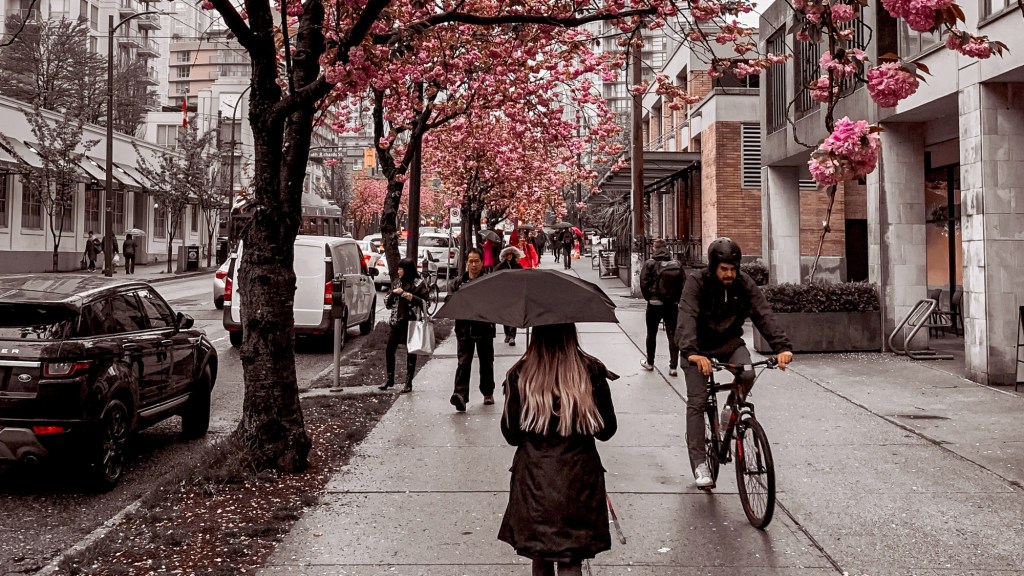
Spring weather is highly unpredictable and can rapidly change by the hour. Some days can consist of rain or shine, sometimes both in irregular patterns. Temperatures can range from 0 to 20 degrees Celsius. Additionally, rain can make sidewalks and transit waiting zones slippery, and can reduce visibility for drivers and pedestrians.
Commuting Strategies for Spring
- Check the weather forecast the night before or the morning of your commute.
- Dress for the weather by wearing a water-resistant jacket or sweater, pants, and footwear that protect you from the rain, wind, and mud.
- Always carry an umbrella or a packable rain jacket.
- Tune up your bike in early spring before you start riding more frequently in warmer temperatures.
- If you have a feasible cycling route to work, mild spring weather offers ideal conditions to try it out!
Summer
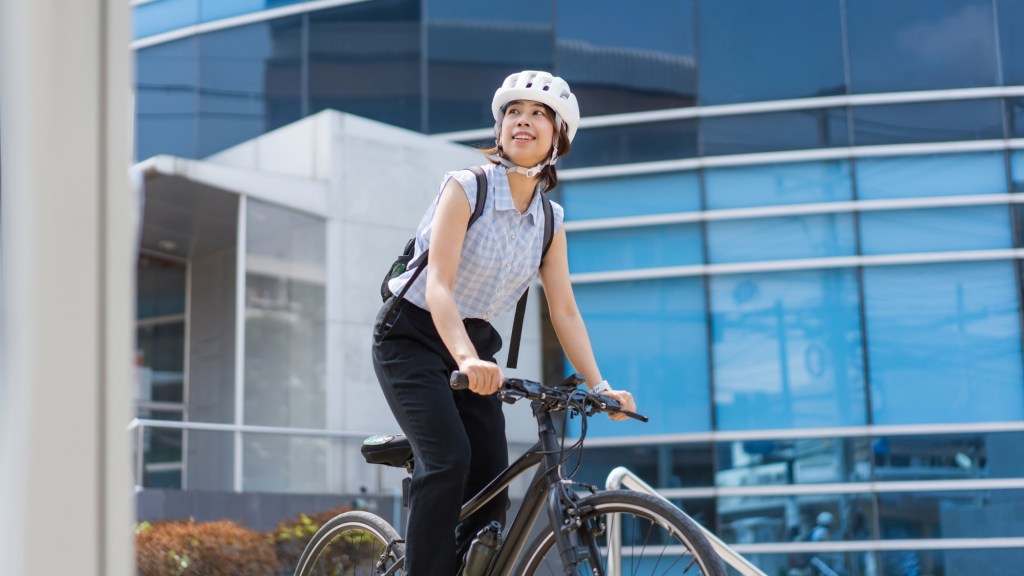
Summer Commuting Challenges
Summer weather fluctuates with changes in humidity, wind, air quality, precipitation, UV levels, and proximity (or distance) to natural bodies of water. These factors can make your commute uncomfortable and dehydrating, especially when transit stops lack shade or vehicles lack adequate air conditioning.
Commuting Strategies for Summer
- If possible, commute during the cooler times of the day, such as early morning or late afternoon.
- Check the weather forecast the night before or the morning of your commute
- Dress in light, loose-fitting clothing, or bring a change of clothes if needed for your destination.
- Protect yourself from sun exposure with a hat, sunglasses, umbrella, and sunscreen, and consider carrying a handheld fan to stay cool.
- Pack lighter than usual. Carrying a heavy bag exerts extra energy, which heat will only worsen.
- Carry cold water in a reusable, BPA-free stainless steel or glass bottle. Leaving plastic water bottles in the sun can release microplastics and harmful chemicals.
- If you have a medical condition exacerbated by heat, keep necessary remedies and medications with you (e.g., inhalers, face masks, antihistamines, etc.).
- Look out for local Bike Month events in June, which often feature group rides in your community and free bike tune-ups.
- If cycling, carry electrolytes to maintain your energy and stay hydrated.
- Perform regular bike inspections. Clean components, check tire wear, and oil the chain. Keep in mind that extreme summer heat increases tire pressure, which can become an issue on longer rides.
Fall

Fall Commuting Challenges
Along with an unpredictable mix of sun, rain, and wind, the fall season brings shorter days and earlier sunsets. The transition can make commuting more stressful for those who feel uneasy travelling in the dark. Furthermore, autumn rain leaves sidewalks and transit waiting zones slippery while reducing visibility for both pedestrians and drivers.
Commuting Strategies for Fall
- Commute along well-lit routes whenever possible.
- Wear a headlamp and reflective gear to increase your visibility to drivers.
- If cycling in the dark, wear a reflective vest alongside reflective ankle and knee bands. Highlighting your pedalling motion is one of the most effective ways to stand out to drivers– even more than using bike lights alone.
- Keep a compact umbrella on hand for unexpected rainfall.
- Hold onto handrails when using stairs or waiting at transit stops.
- Check the weather forecast the night before or the morning of your commute.
- Dress in layers to adapt to cooler mornings and evenings, and wear water-resistant footwear to handle rain and slippery, muddy ground.
- Drivers should switch to winter tires as temperatures approach 7 degrees Celsius, as the winter rubber compound performs significantly better in cold weather.
- Connect a compatible fitness tracking app (such as Strava, Garmin, or Google Health) to the Smart Commute App. October is Smart Commute Month, meaning every logged trip is a chance to win prizes.
Winter
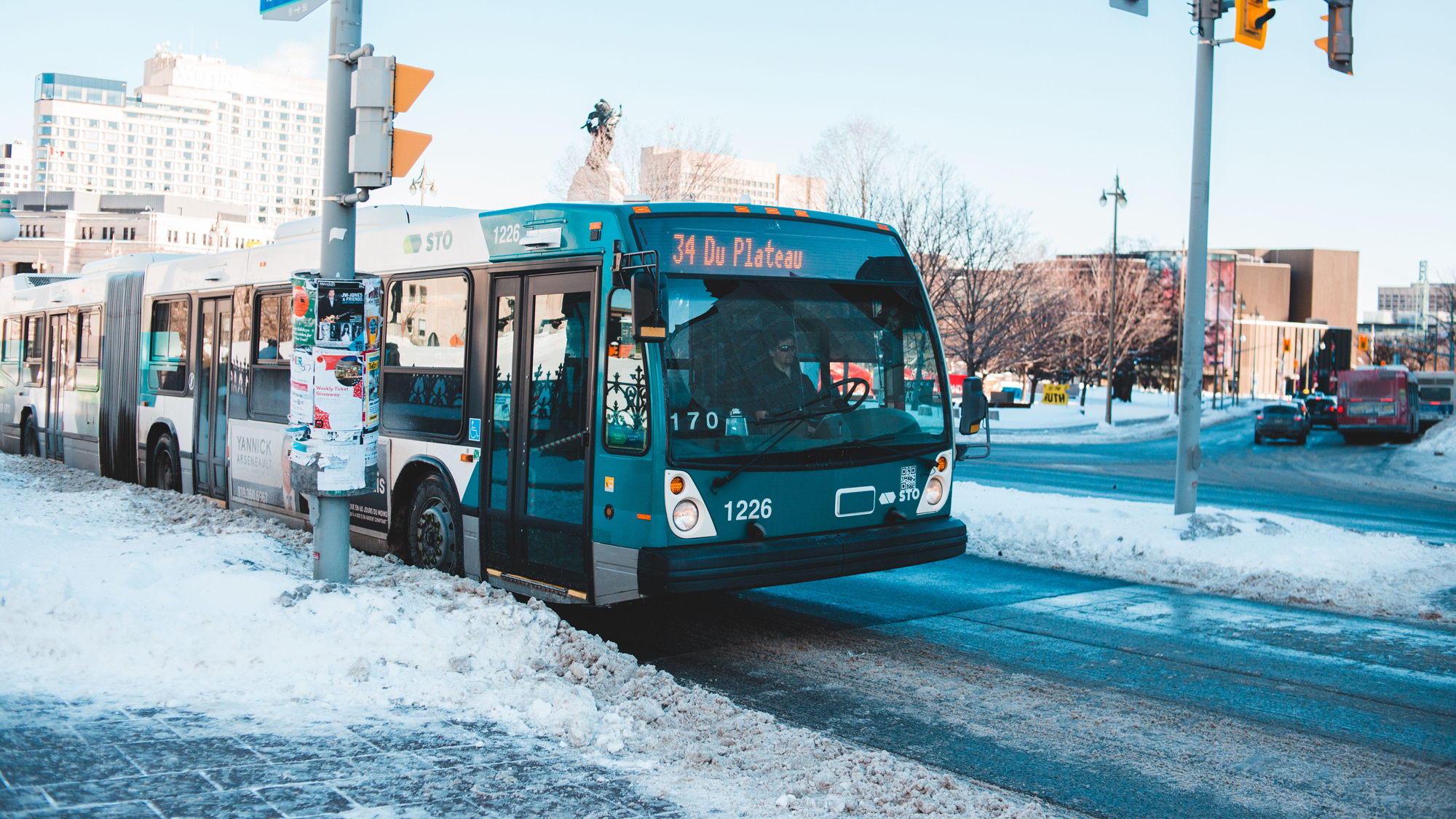
Winter Commuting Challenges
Winter conditions make sidewalks, platforms, and stairs extremely slippery. Heavy snowstorms and subzero temperatures frequently cause transit delays while drastically reducing visibility for drivers and pedestrians alike.
Commuting Strategies for Winter
- Apply sunscreen year-round because snow reflects harmful UV rays directly back at your face.
- Cyclists should wear glasses or goggles to prevent glare and protect against biting winds.
- Attach reflective strips to your outerwear and use a headlamp or clip-on lights during dark winter hours.
- Verify that your front headlight and red taillight work before every ride and carry spare batteries.
- Always hold onto handrails on stairs and transit platforms to avoid dangerous slips on icy surfaces,
- Check live transit alerts and weather forecasts every morning before leaving home to plan for delays or alternate routes.
- Wear insulating layers with a windproof shell alongside waterproof boots with treaded soles for ice grip.
- Protect your hands and feet with thermal gloves and thick wool socks.
- Log your trips on the Smart Commute App during February’s Winter Commute Month to qualify for prizes.
Conclusion
- Commuting can be frustrating for many reasons, but staying prepared helps remove seasonal stressors from your daily routine. Spring, summer, fall, and winter all present unique environmental factors that complicate travel. Keep these practical strategies in mind to ensure your journey stays safe, smooth and healthy all year long.
- Preparing for unpredictable weather and changing daylight will make your daily travel far more manageable.
- Staying proactive with your gear and timing helps you avoid unexpected delays and safety risks.
Discover Your Commute Options
Our team designs personalized travel plans to provide commuters with accessible and sustainable transportation options. Contact us today to find out how we can help optimize your daily route.