
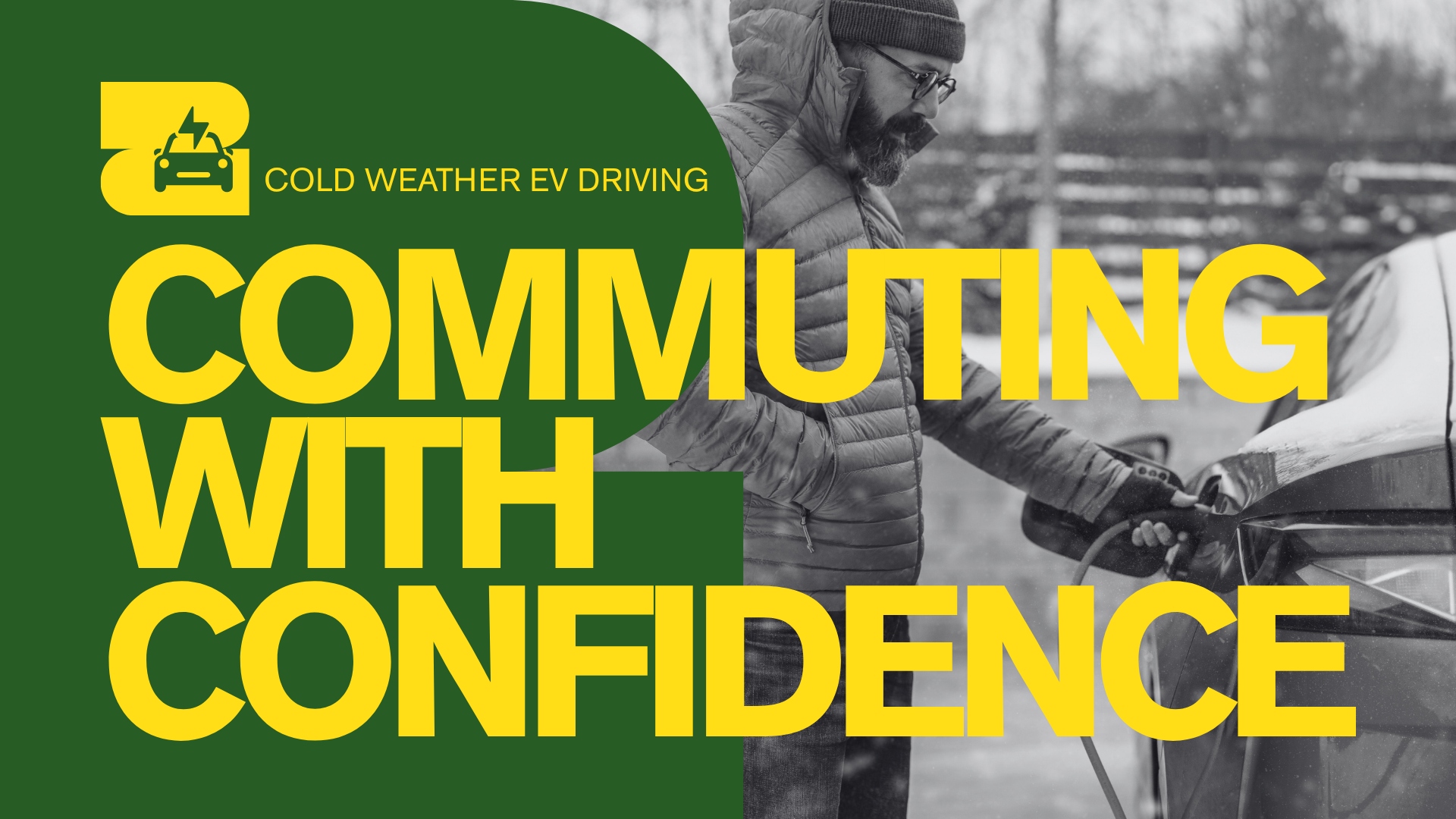
Commuting looks different for everyone, especially as routines shift and workplaces evolve. Whether you travel by transit, bike, foot, carpool, or electric vehicle, feeling confident on your commute can make a meaningful difference.
The Commuting with Confidence series shares practical, everyday tips to help you feel more comfortable, aware, and prepared on your journey – no matter how often you commute or what mode you choose. These tips are designed to support safer, more confident travel as you return to the office and navigate changing schedules and seasons.
You made the switch to an electric vehicle (EV) — fantastic choice! Better for the environment, smoother to drive, and easier on your wallet over time. But then November hits, the temperature drops, and suddenly you’re experiencing the concerns you have about your battery.
Here’s the truth: EVs handle Canadian winters just fine, they just need a slightly different approach.
Why Cold Weather Affects EVs
Lithium-ion batteries — the kind in your EV — are less efficient in the cold. They have to work harder to deliver the same energy output, which means your range can drop anywhere from 205 to 40% on a really cold day. Factor in the fact that Ontario winters regularly dip well below -15°C, and yes, that’s worth paying attention to.
The good news? Most of the impact is manageable with a bit of preparation. Once you know what to expect, it stops feeling like a problem and starts feeling like just another part of the routine.
1. Set Yourself Up Before You Leave the Driveway
Precondition while you’re still plugged in. Most EVs have an app that lets you schedule cabin and battery warming before you unplug. Using the app to warm your car while it’s still connected to your home charger means you’re drawing from the grid and not your battery. This means you start your commute with your full range intact. On a -20°C Toronto morning, this is genuinely life-changing.
Keep your battery above 20%. In extreme cold, try not to let your charge dip below 20–25%. Lithium-ion batteries manage their temperature better when there’s a bit of buffer energy available, which helps protect both your range and your battery’s long-term health. Think of it as never letting the gas gauge hit empty — especially on colder days, the buffer matters even more.
Use your heated seats and steering wheel first. Blasting the HVAC to heat the entire cabin is one of the biggest energy drains in cold weather. Your heated seats and steering wheel deliver warmth directly to your body far more efficiently, so lean on these first and use the cabin heat as a top-up rather than your primary source of warmth.
2. Winter-Proof the Hardware
Your battery isn’t the only thing that behaves differently when the temperature drops. Here’s how to make sure the rest of your car is ready for wintery road conditions.
Switch to winter tires — and yes, this matters more for EVs. EVs are heavier than gas-powered cars because of the battery pack, so they need more stopping distance on slippery roads. All-season tires simply aren’t designed for the cold temperatures and snowfall that we get here. Instead, dedicated winter tires give your EV the grip needed to stop that extra weight safely on icy Ontario highways and side streets.
Check your tire pressure weekly. Cold air causes tire pressure to drop — roughly 1 PSI for every 5°C drop in temperature. Underinflated tires affect both your handling and your efficiency, so a quick weekly check (when the tires are cold, before you’ve driven) is an easy habit that pays off fast. In some cases, you can get this information on your EV’s screen.
Keep your charging port clear. Before you plug in, check that the charging port is free of ice and snow — a quick brush-off is all it takes. It’s also worth storing your charging cable somewhere dry and relatively warm overnight. A cable that’s been sitting in a frozen garage can stiffen up and become surprisingly awkward to handle at 7 a.m. when you’re already running late.
3. Drive and Route Smarter
A little foresight on the road goes a long way in winter — especially on days when conditions are unpredictable.
Know where your backup chargers are. Ontario’s EV charging network has grown a lot, but during peak winter commuting hours, fast chargers along busy corridors like the 400-series highways can get busy. Before a longer trip, map out not just your primary charging stop but a backup option nearby. Knowing it exists is often all you need to stop the range anxiety before it starts.
Drive smooth, not fast. Hard acceleration and high highway speeds are two of the fastest ways to drain your battery in cold weather. A steady, smooth driving style doesn’t just stretch your range further — it also keeps you safer on slick roads.
Park out of the elements whenever you can. If you have access to an underground garage at the office or a covered spot at home, use it! Even keeping your battery a few degrees warmer overnight makes a noticeable difference in your startup range the next morning.
Pack a basic emergency kit. Be prepared for anything with a small kit in the trunk: warm gloves, a blanket, a flashlight, a phone charging cable, and some extra windshield washer fluid rated for -40°C. If you’re ever delayed or stuck due to weather, you’ll be glad it’s there.
Check road conditions before you leave. Ontario’s 511 highway information line and the Ministry of Transportation’s road condition updates are genuinely useful tools — not just for long trips, but for everyday commuting during storm systems. If conditions are bad, give yourself extra time or shift your departure by 30 minutes to let the plows do their work first.
You’ve Got This
EV driving in cold weather isn’t about being a tech expert or obsessively watching your battery percentage. It’s about building a few smart habits that become second nature when the temperature drops. Precondition, keep that buffer charge, grab the winter tires, and know your route — and your EV will carry you through the season with confidence.
Ready to Drive with More Confidence?
Delivered by a Regional Strategic Coordinator from the Ontario Ministry of Transportation, our Cold Weather Driving Essentials Workshop will equip your employees with expert advice on navigating wintery roads safely, from handling icy conditions to emergency preparedness. This workshop meets them where they are and can be done remotely or in-person. Contact Warren Burnett (Business Development Manager) to learn more about our free Commuting with Confidence workshops.
Want to Feel Confident on Every Part of Your Commute?
Confidence looks different for everyone and that’s okay.
Your commute should support your life, not add unnecessary stress to it. Whether you’re easing back into in-person work, trying a new mode, or adjusting your routine with the seasons, the goal isn’t perfection – it’s progress and comfort over time. Our Commuting with Confidence workshops can give you the boost you need with personalized commuting tools and advice.
Explore the rest of the series:
- Carpooling with Confidence: Your Guide to Sharing Rides (Without the Awkwardness)
- Commuting with Confidence: 6 Tips for Women Navigating the City on Their Own Terms
- Cycling with Confidence: 4 Tips Every Beginner Cyclist Needs to Know
- Riding GO Transit with Confidence: What to Know Before You Go
- Riding TTC with Confidence: What to Know Before You Go
- Transit with Confidence: 5 Tips All Transit Riders Need to Know
- Walking in Cold Weather with Confidence: Your Guide to a Safer, Steadier Commute
This post is part of the Commuting with Confidence series — practical guidance to help every employee navigate their journey safely and confidently, whatever that journey looks like.